Checking out Chickens
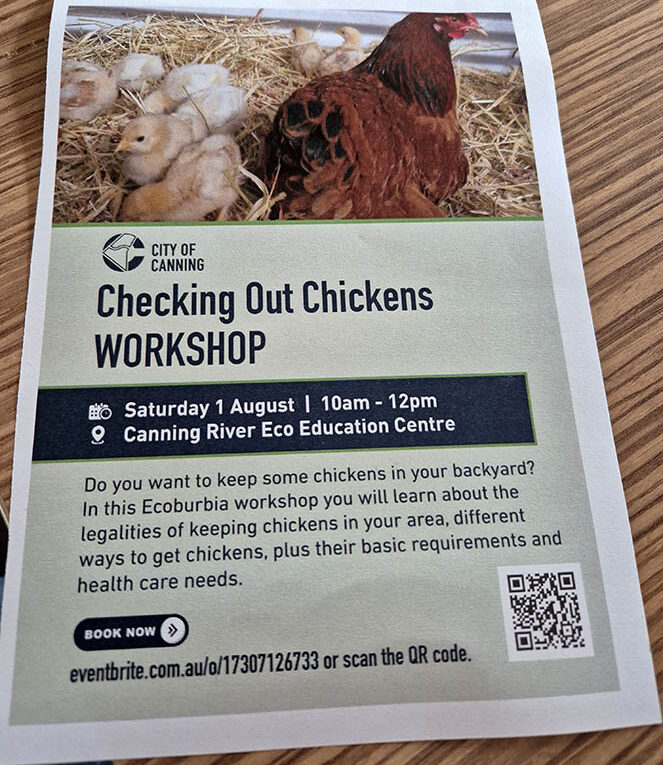
Our town council ran a session on keeping backyard chickens this weekend, facilitated by Shani Graham from Ecoburbia – a local urban farm that’s home to a number of very happy chooks. Although we do have our ‘chicken whisperer’ on speed dial for chicken emergencies, it seemed like a good idea to amble along to the workshop to add to our (limited) store of knowledge on this front.
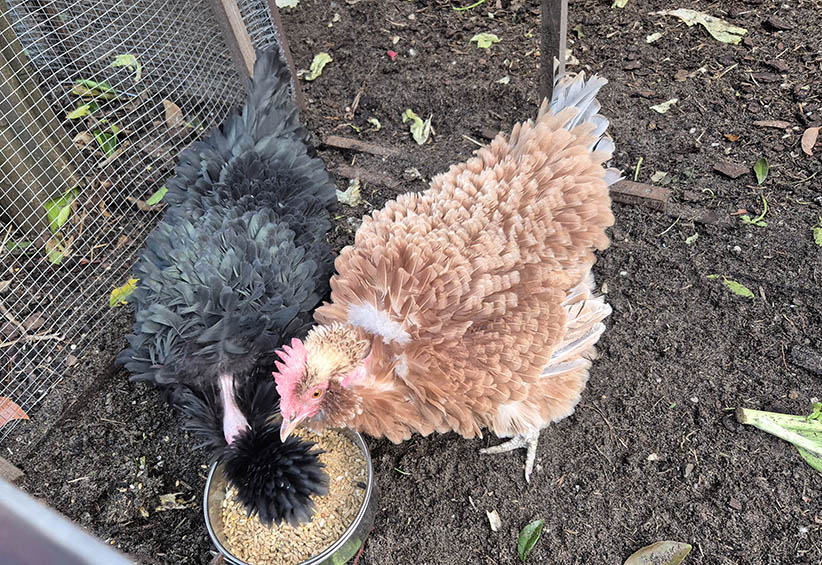
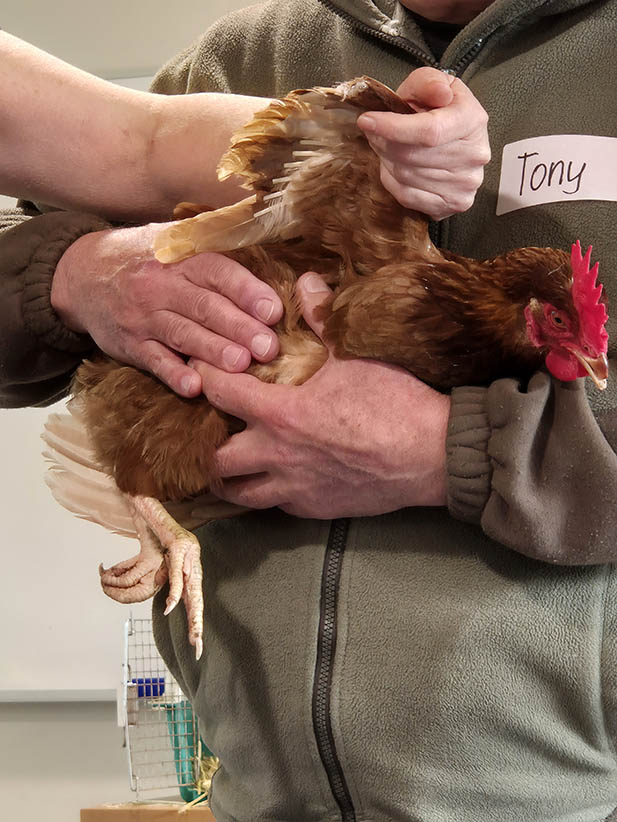
The two hours proved to be most worthwhile and even provided some entertainment when Himself got to be the ‘beautiful assistant’ during the demonstration of how to clip a chicken’s wing. He was fine with it, but I’ve seldom been more grateful for the fact that our ladies are frizzles. This means that, because of the genetic mutation that affects the structure of their frizzle-fluffy wings, they can’t fly. Much happiness on my part as that this means there’s no need for wing clipping, especially since that’s a two person job – and this person does so not want in on that action!
Anyhow – moving on to other things we covered in the session. For the most part we seem to have things largely sorted out: the ladies have they have an enclosed run that keeps them safe from cats and (possibly diseased) wild birds; the grain we feed them contains adequate protein, and we add shell grit and kitchen & garden scraps to keep them happy and healthy; they have access to fresh water, a weatherproof hutch and areas where they can sand bathe if they want to (they do). They have shade, we’ve had the soil tested for chemicals, and we keep the run and hutch areas clean and make sure we wash our hands after handling the chooks or anything in their run.
It was good to hear we had most of the bases covered, but it’s clear that there are definitely areas where we can improve:
- In the run, we’ll need to replace the mulch they’ve dug through over the past months with a fresh deep litter system of approx 15cm mulch & straw. They’ll scratch through that and churn it over and we can replace that in turn in every 6 – 12 months.
- Water – with the H1N5 avian influenza virus definitely now in WA, we’ll probably be replacing their current water bowls with a ‘cup system’ – an automatic water dispenser where the water is contained and covered, only released when the chickens trigger the dispenser. This makes it less likely to get contaminated by the chickens scratching dirt and/or droppings into the water – but will require regular maintenance to ensure we don’t end up with algae build up. Adding some apple cider vinegar to the water reservoir should help with that.
- Feeder – the ladies are currently fed every morning and their food bowl is inside the run, but there’s no cover over it. In order to further reduce their risk, we’re sourcing a treadle feeder for them; they’ll need to learn to step on the weight-activated foot plate in order to get some food to pop out, but I’m sure they’ll figure it out.
- The final thing is really the health aspect – and this is, I must admit, was the bit I did not enjoy hearing about: (1) the avian ‘flu is on the rise and scary, so we’ll need to keep a close eye on our girls and quarantine them if necessary; (2) it turns out we should be checking them for mites and suchlike regularly. This involves turning each bird upside-down and having a good look under the wings, at their neck, breast, legs and claws, and also at the vent area/cloaca. Unfortunately (for me), this is (oh horror!) easier if two people do it – one to hold the bird still and one to ruffle her feathers and, if necessary, sprinkle her with an insect powder like pestene. I’m sure they’ll get used to it, perhaps I will too…; and (3) we need to treat them for worms on a monthly basis – which involves taking away their water for 24 hours so that they’re thirsty, then adding the worming mix to their water before letting them near it.
Other than that, Shani suggested planting wormwood and using it in the nesting area to keep insects at bay, to give them some yoghurt occasionally and to chat to them to strengthen their bond with us. She talked about how to add an extra bird to the flock and recommended having at least three birds – but we’re in no hurry to follow up on that idea, for now at least – but we’ll see what happens.
It was a great workshop (thanks, Shani). One of my take-homes was that I hadn’t really given much thought to socialising with the ladies – although I have always chatted to them when I feed them and tend to leave the radio on for them since they seem to like it. They both come running when they hear my voice, which is kinda cute, but I’ve always thought they’re just after food – not my company. Since Saturday though, I have to confess to taking more time to chat with them – no doubt confirming my crazy-chicken-lady status with the neighbours!